
Demat Account Opening for Beginners
How to Open a Demat Account Demat Account Opening for Beginners: A Complete Guide
Buying stocks, mutual funds, ETFs, bonds and other securities is more accessible than ever. But, before you start investing in Indian stock market, one of the first things you need is a Demat Account. If you are a beginner to investing, knowing the process of demat account opening for beginners can ease your first step a lot.
“Demat” is short for dematerialised. A demat account allows investors to hold securities in electronic form. According to SEBI’s guidelines, one must open a demat account with a SEBI registered Depository Participant for holding and transferring securities. A trading account is used to buy and sell securities through a stock broker, however.
In this guide, we will take you through how to open an open demat account for beginners, the documents required, KYC requirements, key charges, and practical tips to get you started with confidence.

Steps to Invest in Equity Stock
Step 1
Lorem ipsum dolor sit amet, consectetur adipiscing elit. Ut elit tellus, luctus nec ullamcorper mattis, pulvinar dapibus leo.
Step 2
Lorem ipsum dolor sit amet, consectetur adipiscing elit. Ut elit tellus, luctus nec ullamcorper mattis, pulvinar dapibus leo.
Step 3
Lorem ipsum dolor sit amet, consectetur adipiscing elit. Ut elit tellus, luctus nec ullamcorper mattis, pulvinar dapibus leo.
Step 4
Lorem ipsum dolor sit amet, consectetur adipiscing elit. Ut elit tellus, luctus nec ullamcorper mattis, pulvinar dapibus leo.
What Is a Demat Account?

A demat account, short for dematerialised account, is an electronic account that holds investments such as shares, ETFs, bonds and other eligible securities in the form of electronic records without the need for physical certificates.
A demat account is a digital locker to store your investments. When you buy shares via your trading account, the securities are transferred to your demat account. Securities are credited when you sell them.
It is important for beginners to understand that Demat account and trading account are different. The demat account holds your securities, the bank account handles money and the trading account is for transactions.
Why a Demat Account for Beginners?
A demat account is an important part of the process if you are looking to invest directly in listed shares or trade securities electronically. It allows you to hold your investments and access them digitally.
The main advantages are:
• Securities held in electronic form
• Easy buying and selling of shares
• Easy access via online platforms
• Faster transfer of securities
• Reduced reliance on physical certificates
• Investments are easier to track
For beginners, the process of opening a modern demat account is generally designed to be processed online, subject to the intermediary’s onboarding and KYC requirements.

Documents Needed for Opening a Demat Account for Beginners
Before you start your application, gather your documents and information. SEBI investor education material mentions PAN as a mandatory document and lists the identity and address proof documents that are commonly accepted such as Aadhaar, passport, driving licence, voter ID and other such prescribed documents.
Generally, beginners might need:
• PAN card.
• Aadhaar or any other valid address/identity proof
• Bank account information
• Mobile No.
• E-mail address
•Photograph or digital photograph where required
• Signature
• Any other documents, as appropriate
Requirements depend on the broker, type of investor and relevant KYC rules. So always check with your preferred SEBI registered intermediary for the latest requirements.
How to Open Demat Account for New Investors ?
The online open demat account process for beginners generally involves a few simple steps.
1. Choose a Suitable Depository Participant
The first step is to choose a suitable broker or Depository Participant. Compare account opening charges, broking, annual maintenance charges, features of the platform, customer support, investment products available and taxes/regulatory charges.
Don’t choose a provider just because it appears free to open an account. Read the entire fee schedule before continuing.
2. Launch Online Application
Go to the website or app of the intermediary you have selected. Select the option for opening a demat or trading account.
Generally you will have to provide basic information like name, mobile number, email address, PAN details and other personal information.
3. KYC complete
KYC (Know Your Customer) is an integral part of the securities account opening process. SEBI investor material says KYC means submission of prescribed identity and address documents and online KYC facilities are available through registered intermediaries.
Present the information that matches your official documents. Inaccurate or conflicting information can cause a delay in account activation.
4. Confirm Your Email and Mobile Number
You may also be asked to verify your mobile number and email address using OTP or any other authentication method. These contact details are also very important as brokers and exchanges use them for important account and transaction-related communication.
5. Full Verification
Depending on the process and the intermediary, you may be required to do further verification, for example digital verification or video based identification.
Follow the instructions as shown by the intermediary. Make sure that all the information you have provided is correct.
6. Add Your Bank Account Details
Funds are transferred into your investments and trades via your bank account. Investors normally have a bank account, trading account and demat account, according to SEBI, which serve different purposes in the securities market ecosystem.
Use your own bank account and provide the required supporting details.
7. Activation of Account
Upon successful KYC and verification, your account can be activated according to the intermediary’s process. Once activated, you can log in to the platform and browse the investment opportunities available.
This is the basic open demat account process for the beginners.
Trading Account vs Demat Account
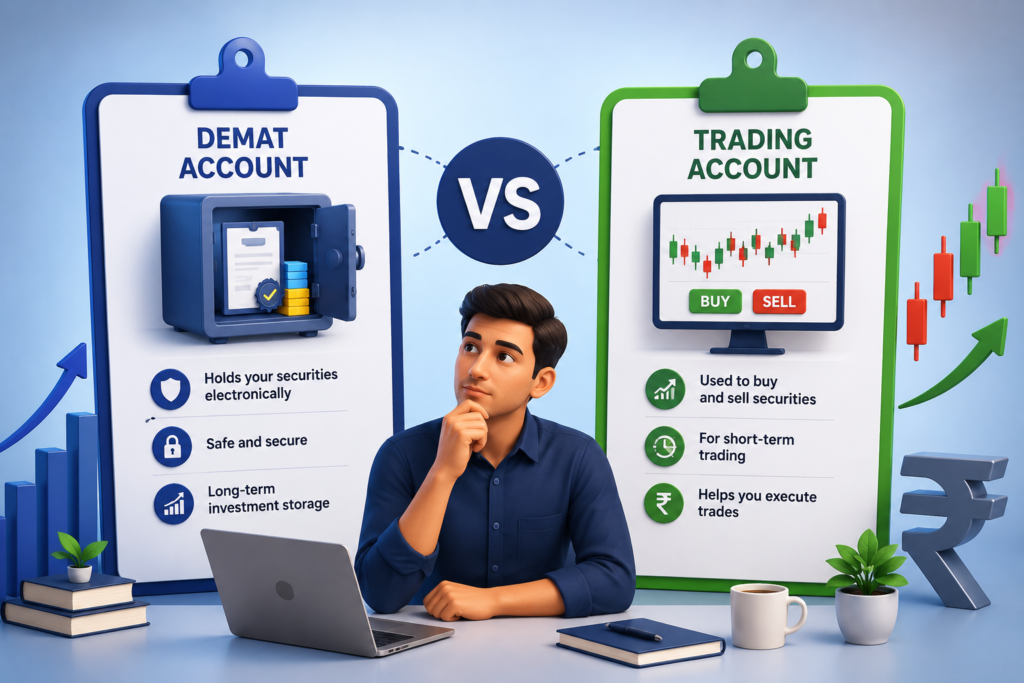
A common mistake made by many first-time investors is to think that a demat account and a trading account are the same thing.
They are related, but they play different roles.
Account Primary Purpose
Demat Account Securities are held in electronic form
Trading Account Enables buying and selling
Bank Account Manages money for investments and trades The SEBI clearly segregates the demat account, trading account and bank account as per their functions.
For beginners this is an important part of demat account opening to understand this difference.
Watch For Fees Before Opening an Account
Some intermediaries might advertize zero account opening charges but beginners should look at the complete pricing structure before opening an account.
Possible charges include:
• Fee for account opening
• Annual maintenance fees
• Stockbroker
• Depository charges
• Charges in respect of Transactions
• Relevant taxes and regulatory fees
The precise charges will depend on the intermediary and the services you use. Always read the current tariff sheet and terms before accepting the account opening agreement.
SEBI’s investor education material also advises the investors to note the fees and broking applicable and keep a copy of the account opening form for their records.

Why choose Equity Stock for Capzentra
Goal based Investing
Lorem Ipsum has been the industry's standard dummy text ever since the 1500s, when an unknown printer took a galley of type and scrambled it to make a type specimen book.
Goal based Investing
Lorem Ipsum has been the industry's standard dummy text ever since the 1500s, when an unknown printer took a galley of type and scrambled it to make a type specimen book.
Goal based Investing
Lorem Ipsum has been the industry's standard dummy text ever since the 1500s, when an unknown printer took a galley of type and scrambled it to make a type specimen book.
Goal based Investing
Lorem Ipsum has been the industry's standard dummy text ever since the 1500s, when an unknown printer took a galley of type and scrambled it to make a type specimen book.
Goal based Investing
Lorem Ipsum has been the industry's standard dummy text ever since the 1500s, when an unknown printer took a galley of type and scrambled it to make a type specimen book.
Goal based Investing
Lorem Ipsum has been the industry's standard dummy text ever since the 1500s, when an unknown printer took a galley of type and scrambled it to make a type specimen book.
Documents Required for Opening a Demat Account
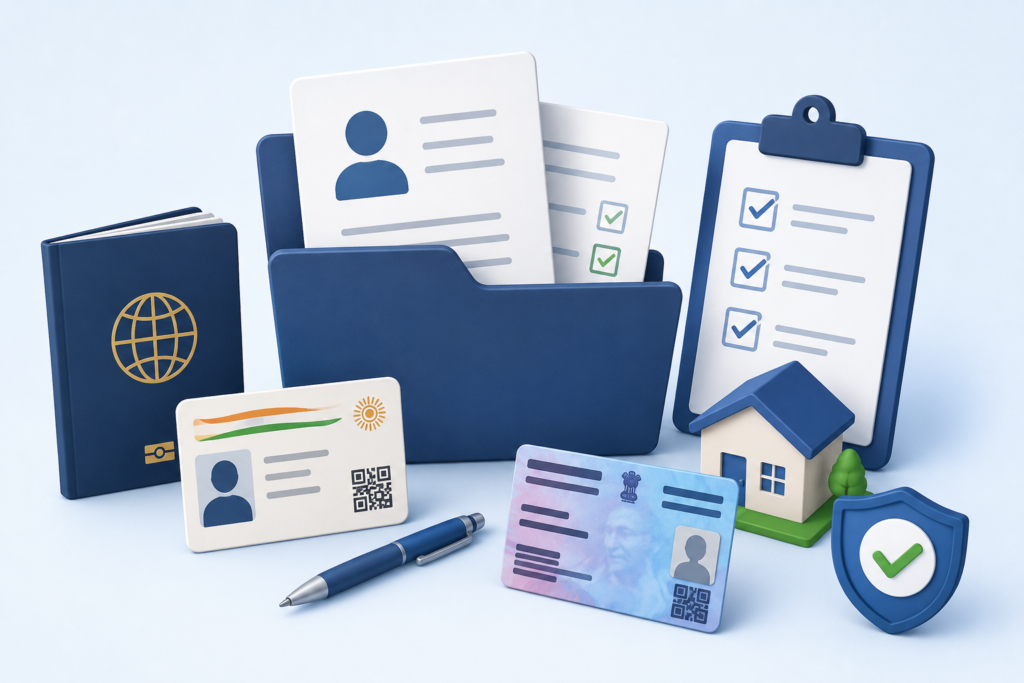
The process of open Demat Account Process for Beginners is basically a matter of providing some simple documents that prove your identity and address. To get you started, investors usually need to have their PAN card, Aadhaar card, bank account details, one passport-size photo and a scanned signature ready. Nowadays, a large number of brokers allow for the uploading of the documents online, which has made the whole process of opening an account faster and without using a single sheet of paper. In order for your account opening not to be delayed during the document verification stage, one of the key things is that the information you give must be consistent with your official documents.
At Capzentra, we are committed to helping investors make their financial journey easier through skilled advice and customized investment solutions. We guide beginners in demat account opening, portfolio management, and planning for long-term wealth creation. Our aim is to empower clients to invest with confidence, control risk efficiently, and enjoy ongoing financial growth.
Tips to New Investors
If you are doing demat account opening for beginners, do not hurry through the application. Be sure to review your personal information carefully before submitting.
Here are some handy tips:
1. Select a SEBI registered intermediary.
2. Compare the charges, not just the promotional offers.
3. Update your PAN and KYC other documents.
4. Review the terms of account opening carefully.
5. Know which market segments you are enabling.
6. Do not share your OTP, password, PIN or any other confidential credentials with anyone.
7. Do not invest unless you know the risks involved.
8. Keep your registered mobile number & email handy.
SEBI further advises the investors to choose the segments in which they want to trade and understand any other facilities or authorisations before accepting.
What Can You Do Once You Have a Demat Account?
When your account is active, you can manage eligible investments on your intermediary’s platform. Depending on what they offer and how you set up your account, you might be able to invest in shares, ETFs, bonds, IPOs and other securities.
However, not all investments are suitable for you just because you open an account. Before investing money, beginners must know the product, potential returns, risks, costs and investment horizon.
A demat account is simply a platform that helps you hold securities in electronic form. Please do your proper research and make your own investment decisions based on your own financial objectives.
Final Thoughts
The first step to participate in the digital securities market in India is to understand the demat account opening process for beginners. The process generally includes selecting an appropriate intermediary, submitting your PAN and KYC details, completing your verification process, sharing your bank details and then waiting for your account to be activated.
For beginners looking to open a demat account, spending time comparing account features, charges, services and regulatory credentials can help you make a more informed choice.
For more information about getting started, you can also refer to the detailed guide on Capzentra demat account opening for beginners page.
Just opening a demat account is just the beginning. Before investing, understand how the market works, know the risks, and make decisions based on your financial objectives, not on short-term market fluctuations.
Frequently Asked Questions
A demat account is an electronic account which holds securities like shares and ETFs in digital form. It is opened with a Depository Participant and works along with a trading account for buying and selling of securities.
Usually, you may be asked to furnish PAN, proof of identity and address, bank details, mobile number, email address and other KYC information. The exact requirements will depend on the intermediary and the type of investor.
The process usually involves choosing a SEBI registered intermediary, filling the online application, providing KYC details, validating your contact details, completing the required verification, entering your bank details and waiting for activation.
“Yep. The demat account holds the securities in electronic form. A trading account is used to execute buy and sell transactions. The related funds are managed by a bank account.
There are many intermediaries who provide online account opening facilities. The precise process may include digital KYC and additional verification measures, contingent upon the intermediary and relevant laws.
Yes. Beginners should check account maintenance charges, broking, transaction related charges, taxes and other applicable fees before choosing an intermediary.
By opening an account, you are gaining access to infrastructure to hold and transact in eligible securities. For beginners, it is important to understand the investment product and the risks associated with it before investing. Having a demat account does not guarantee returns.